 HIXOR
The Benesse Data Breach (2014): When the Insider Already Had the Key — About 35 Million Records Sold to List Brokers
Key points
- Customer data held by Benesse Corporation leaked in 2014. Benesse announced that information equivalent to about 35.04 million records had been sold to three list brokers; it estimated the actual number of affected customers at about 28.95 million records
- The person who took the data was a former employee of a subcontractor to a Benesse group company, who had been given legitimate access rights to the database for maintenance work. This was not an external hack
- Benesse itself published why it was not stopped: the write-control system did not cover certain smartphones, the bulk-download alert was not configured for this database, and access logs were recorded but never regularly checked
- The apology item offered to customers was a ¥500 voucher. About ¥26 billion (¥26,039 million for the full year) was booked as a special loss for information-security measures, followed by a METI recommendation and revocation of the Privacy Mark. The criminal court sentenced the former employee to 3 years and 6 months in prison and a ¥3 million fine at first instance, reduced on appeal to 2 years and 6 months and a ¥3 million fine
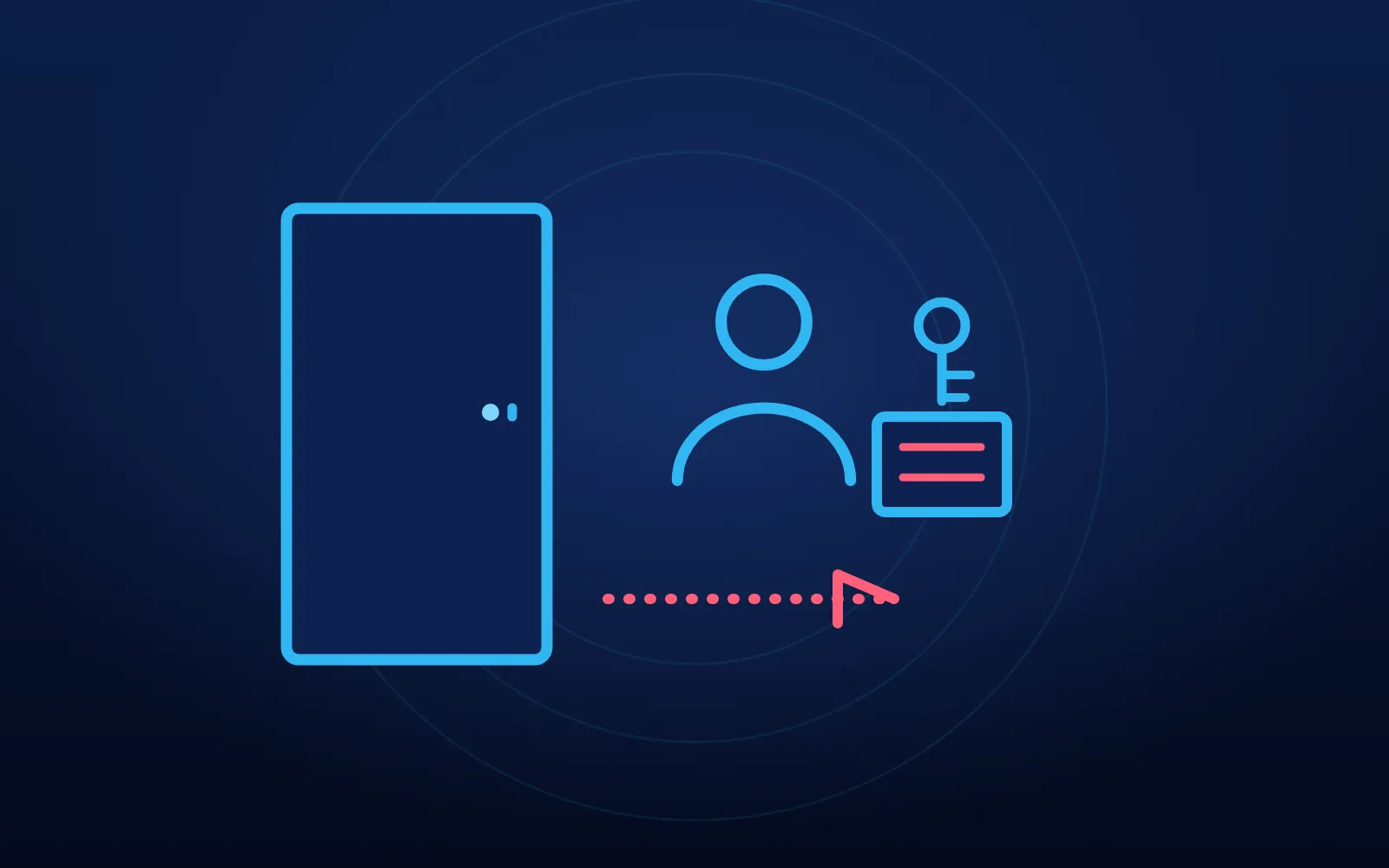
The Benesse leak of 2014 is one of Japan's best-known personal-data incidents. Information equivalent to about 35.04 million records was sold to three list brokers. Yet there was no break-in. The person who took the data was a former employee of a subcontractor to a Benesse group company, who had been given legitimate access rights to the database for maintenance work. Nobody broke through a wall — a person who had been handed the key used it to carry the data away. This case file uses only Benesse's own published disclosures and official records.
What happened — the timeline
- Late June 2014: Customers began contacting Benesse about direct mail and sales calls arriving at addresses and numbers they had registered only with Benesse. Benesse started an internal investigation on 27 June
- 9 July 2014: Benesse announced the leak — about 7.6 million records, possibly up to about 20.7 million — and its chairman and president apologised at a press conference
- 15 July 2014: Benesse set up a Personal Information Leak Incident Investigation Committee chaired by an outside lawyer. On the same day, according to a later court judgment, Benesse filed a criminal complaint with the police
- 17 July 2014: Police arrested a systems engineer who had been dispatched to the company handling maintenance of the database, on suspicion of violating the Unfair Competition Prevention Act
- 10 September 2014: Benesse published its findings. Information equivalent to about 35.04 million records had been sold to three list brokers; the actual number was estimated at about 28.95 million records. Benesse also announced a ¥500 voucher (an electronic-money gift or a nationwide book card) as an apology item, with the option to donate ¥500 per record to the Benesse Children's Foundation instead
- 26 September 2014: The Ministry of Economy, Trade and Industry (METI) issued a recommendation under Article 34 of the Act on the Protection of Personal Information, finding violations of the duty to take security control measures (Article 20) and the duty to supervise contractors (Article 22)
- 26 November 2014: JIPDEC, the Privacy Mark certification body, notified Benesse Corporation that its Privacy Mark certification was revoked
- 29 March 2016: In the criminal trial of the former employee, the Tachikawa Branch of the Tokyo District Court sentenced him to 3 years and 6 months in prison and a ¥3 million fine, with no suspension. On 21 March 2017, the Tokyo High Court reduced the sentence on appeal to 2 years and 6 months in prison and a ¥3 million fine
The mechanism, in plain words
The flow is simple. Systems development and operation for Benesse Corporation were handled by a group company, Shinform. A former employee of one of Shinform's subcontractors worked on database maintenance at Shinform and, because the work required it, had been given legitimate access rights to the database in question. Using those rights, he extracted customer information onto a work computer and took it out of the company via his personal smartphone. He then sold it to three list brokers. That is the account Benesse itself published.
In other words, nobody broke through a wall. A person who had been given the key used the key to carry the data away. The lesson of this case is therefore not about firewalls. It is about who is given a key, how far that key reaches, and whether anyone watches how it is used.
Part of what happened to the data afterwards is also on the record. In its own statement, JustSystems said that in May 2014 it bought 2,573,068 records from a list broker, Bunkensha, used them to send direct mail in June 2014, stopped using them on 9 July, and decided to delete all of the purchased data. JustSystems also stated that it had not used the data knowing it was information leaked from Benesse. In October 2014, JIPDEC issued JustSystems a recommendation measure under the Privacy Mark scheme. Once data reaches a list broker, it spreads to the companies that buy lists — that is what makes the list trade dangerous.
The damage — official figures only
In its 10 September 2014 announcement, Benesse said information equivalent to about 35.04 million records had been sold to three list brokers. Because that count includes overlaps, Benesse estimated the actual number of affected customers at about 28.95 million records. The leaked items were:
- The service registrant's name, gender and date of birth
- The name, gender, date of birth and relationship of a parent or child registered at the same time
- Postal code, address and phone number
- Fax number (registrants only)
- Expected due date (some services only)
- Email address (some services only)
Benesse also stated that no fact was confirmed that credit card information had been sold to the list brokers.
In money terms, Benesse Holdings announced on 31 July 2014 that it had booked ¥26,000 million (about ¥26 billion) as a special loss: the apology to customers, the cost of sending apology letters and handling customer inquiries, and the costs of the investigation and information-security measures. In the full-year earnings release for the year ended March 2015, the information-security measure costs booked as a special loss came to ¥26,039 million. The apology item for each affected customer was a ¥500 voucher. The gap between the scale of the leak and the size of that item drew wide criticism at the time.
The official consequences followed: a METI recommendation, and revocation of the Privacy Mark. More than money was at stake — the company's standing as a business trusted with personal information was itself put in question.
What went wrong
Benesse listed the causes itself, in its 10 September 2014 announcement. Every one of them is a weakness against an insider, not against an outside attacker.
- The write-control system had a hole: Writing data from work computers to external media was banned by internal rules, and a control system was in place. But when that system was upgraded, it was left running without support for writing to certain new smartphone models. The former employee used exactly that gap to write data to his personal smartphone
- The bulk-download alert was not set on this database: The internal network had a mechanism that warned when large volumes of data were handled. The database the data was taken from was not included in that alert configuration
- Access logs were recorded — and not looked at: Access to the database was logged automatically, but the logs were not regularly monitored or checked. Benesse itself acknowledged that regular monitoring could have made early detection possible
- Contractor supervision did not reach the system that mattered: METI found that, in Benesse's regular audits of its contractor, the information system that became the leak route was outside the audit scope — a violation of the duty to supervise contractors (Article 22). METI also found that Benesse had no department responsible for the use and management of personal information across its operations — a violation of the security control duty (Article 20)
Benesse's own summary of the root problem pointed at the company's culture: overconfidence in its own information security, and audit and monitoring practices built on the assumption that people inside could be trusted.
Lessons for a small company
This was a large company, but the structure exists in any business. If you keep a customer list in a spreadsheet or a cloud service, and you ask an outside person to help maintain it, the shape of the risk is the same — only the scale differs.
- Anyone who can touch the customer database is part of your security: An insider with legitimate rights cannot be stopped by antivirus software or a firewall. Start by writing down who can access customer information at all
- Give every person their own account: With a shared account, you cannot trace who did what. Employees and contractor staff alike get individual accounts, and access is removed when the work ends. The order of work is set out in "Former Employees' Accounts: What to Stop, When, and in What Order — Timing and Checklist"
- Make bulk downloads visible: In this case, the database that mattered had no large-download alert. Check whether the cloud or sales tools you use can notify you, or set a limit, when a large amount of customer data is downloaded
- A log nobody reads does not protect you: Logs were being recorded at Benesse; nobody checked them regularly. Decide who checks, and when — even once a month — for unusually large access or access on days off
- Put contractor rules in the contract, and check them: No personal devices, no taking data out, conditions on sub-contracting, deletion of data when the work ends. Write it into the contract rather than agreeing it verbally, and confirm it is actually followed. In this case, the fact that the key system sat outside the audit scope became one of the grounds for the regulator's action
- Block the route to personal phones and USB drives: Decide where work data may be stored and how it may leave, and check whether copying to personal devices can be blocked technically
To check who in your own company could walk out with the customer list, start with a free self-check. You can also use the Email Leak Check to see whether an email address appears in known leaked data. If you want to go further — taking stock of access rights including contractors, and setting priorities — the Security Assessment (¥30,000, tax excluded) organises your current state into a clear picture. More cases are in the Breach Case Files index.
Review your current posture with 25 questions. Runs in your browser only.
Check your understanding
Tap an answer to check yourself. Nothing is saved or sent.
Start the quiz3 questions
Q1. Who sold Benesse's information to the list brokers?
See the answer
There was no break-in: the data was carried out using legitimate access rights (Benesse's announcement of 10 September 2014).
Q2. According to Benesse's announcement, information equivalent to about how many records was sold to the three list brokers?
See the answer
About 35.04 million records. Excluding overlaps, the actual number of affected customers was estimated at about 28.95 million records.
Q3. Which of these is a reason Benesse itself published for why the removal was not stopped?
See the answer
The alert was not configured for this database. Logs were recorded but not regularly checked, and the write-control system did not support certain smartphone models.
See the latest threat intelligence