 HIXOR
Your Email Vendor Leaked the List — Check Today Whether Your Company Is in It
Key points
- The intrusion at YMIRLINK's Cuenote FC was detected on 16 October 2026. The third report (11 November 2026) confirmed data taken from 49 systems, totalling 47,864,147 records — a cumulative record count (延べ), not a count of people
- Every leaked record included an email address. Subsets also included names, birthdates, phone numbers and hashed passwords. YMIRLINK states that no leak of payment information has been confirmed at this point
- Client companies that disclosed the impact themselves include the Resona group banks, JR Central / West / Kyushu, Nomura Securities, BANDAI SPIRITS and Cybozu. The systems breached were the vendor's, not theirs
- If you outsource email delivery or booking intake, first make a list of what you outsource and to whom — then ask each vendor today: were we affected, what data of ours did you hold, and what have you changed
- Spoofed mail abusing this incident — fake "Saison Card" mail sent from [email protected] — has already been observed. Expect phishing that uses real names and real memberships, and warn staff and customers
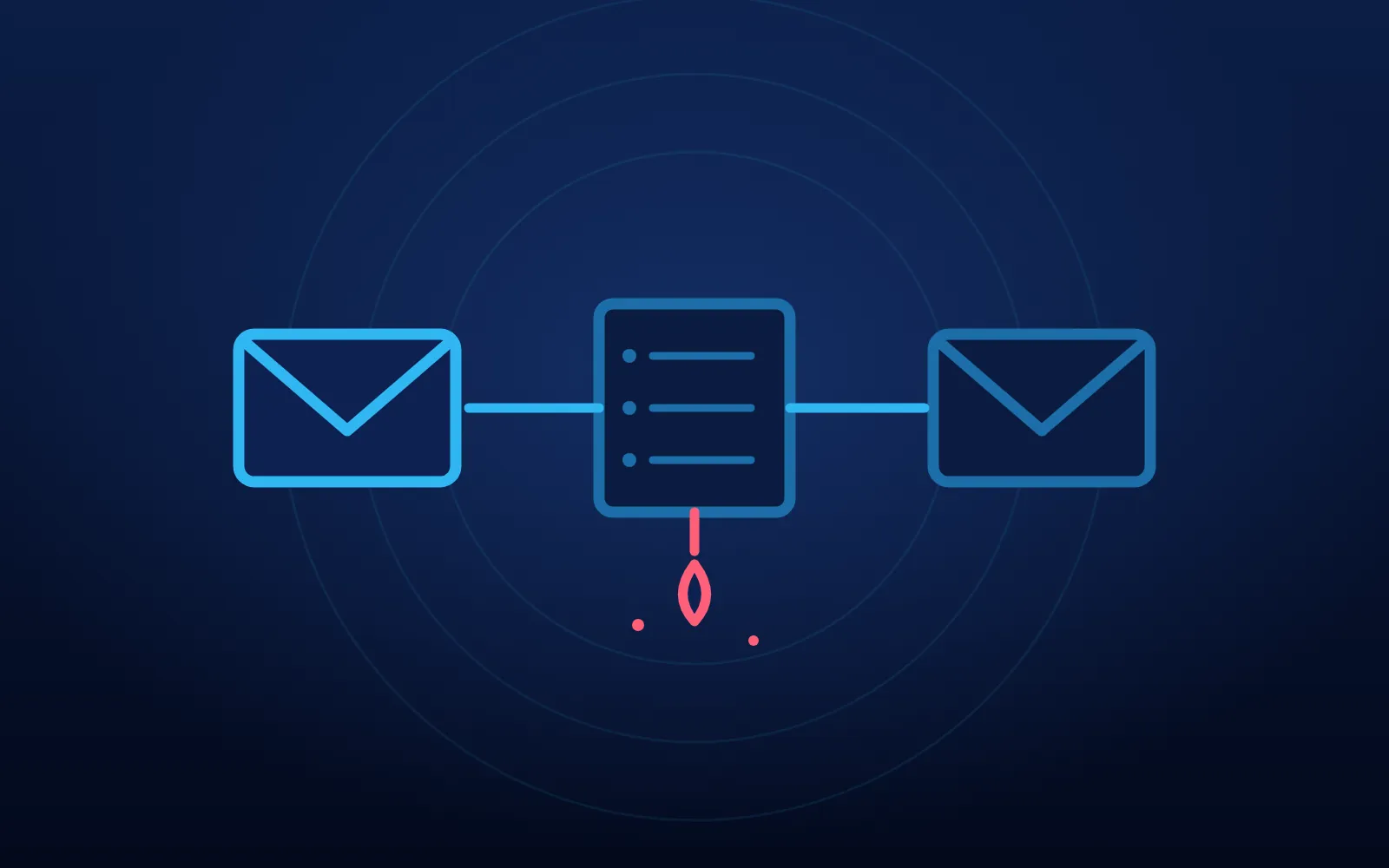
Here is the short answer first. On 11 November 2026, YMIRLINK — the operator of the Cuenote FC email-delivery service — confirmed in its third report that delivery-list data was taken from 49 of its systems: a cumulative total of 47,864,147 records. That is a record count, not a number of people. The size of the number is not the point for a small company. The point is whether your company hands its customer list to an outside service — for a newsletter, for booking confirmations, for member notices. If it does, do not file this under "someone else's breach." Ask your vendor three questions today, and prepare for the phishing that follows a leak like this.
What happened — many companies' customer lists, held by one vendor
YMIRLINK detected the intrusion on 16 October 2026 at 06:49, when a staff member noticed an anomaly in their own account on the operations management system. A first report followed on 19 October, a second on 26 October, and the figures were confirmed in the third report on 11 November.
According to that third report, the data taken was delivery-list information registered in 49 systems of Cuenote FC's dedicated ASP plan: 47,864,147 records in cumulative total. The figure was revised down from the second report's maximum estimate (about 51.6 million) after log cross-checking and database analysis removed duplicates. "Cumulative" matters: this is a count of records taken, not a count of people affected. If the same person's address sat in more than one system or record, it was counted more than once.
The contents differ by record. Every record included an email address. Beyond that, subsets included member IDs (30,500,167 records), names (6,665,055), birthdates (949,217), phone numbers (412,794) and hashed passwords (226,158), among other fields. YMIRLINK states that no leak of credit-card or other payment information has been confirmed at this point. Separately, 190 contract-holder records in its customer management system, Cuenote BASE, were in a state where they could be viewed.
On method, YMIRLINK's third report describes two patterns, and this article goes no further than its account. In the first, attackers used a program vulnerability to place a malicious program on a server, reach the core database directly and output data, then spread to other servers over the internal management network. In the second, they used the same vulnerability to steal the session information of a legitimately logged-in user, entered the admin screen as that user, and took data out using the built-in CSV download function — a pattern that looks like normal administrator work, which is why it only surfaced in a retrospective audit of all system logs. A final report, following the external forensic investigation, is still to come.
The reach is wide because the vendor is shared. Client companies that disclosed the impact themselves include Resona Bank, Saitama Resona Bank and Kansai Mirai Bank; JR Central, JR West and JR Kyushu (for Express Reservations / SmartEX); Nomura Securities; BANDAI SPIRITS; and Cybozu. To be clear: it was not these companies' systems that were breached — it was their common vendor's. That is exactly why this is not only a story about large companies. It is a story about every company that keeps its customer list at a vendor.
Step one — list what you outsource, and to whom
Before anything else, write down every outsourced task that touches customer information:
- Newsletters and email delivery (delivery services, email platforms)
- Booking intake and booking-confirmation mail (reservation systems)
- Member notices, app push notifications and SMS delivery
- Survey forms and campaign entry handling
- Anything else — online shop, contact forms — where a vendor holds customer names or email addresses
For each one, note the service name, the vendor company, what data you hand over (email addresses only, or names, phone numbers and birthdates as well), and who the contact point is. Without this list, you cannot ask the next questions. And if the exercise surfaces a service nobody remembers contracting, that finding alone was worth the work.
Three questions to ask that vendor today
Whether or not you use Cuenote FC, put these three questions — in writing, so the answers are on record — to every vendor that holds your customer list.
Question 1: Are we inside the affected systems and period — or not?
If the answer is "not affected," ask for the reason in writing (for example, that the plan or system you use was outside the affected set). If it is still under investigation, ask by when it will be settled.
Question 2: What data of ours, exactly, did you hold?
Email addresses only — or also names, birthdates, phone numbers, member IDs, passwords (including hashed ones)? Ask the vendor to separate "data you held for us" from "data that may have been taken." Without this, you cannot describe the impact to your own customers accurately.
Question 3: What have you changed since — and what is the notification promise?
A bare "measures have been taken" is not enough. Ask what was actually completed and when — vulnerability fixes, access restrictions, monitoring — and, just as important, what your contract says about next time: within how many hours, and by what means, will the vendor notify you of an incident? That speed decides how fast your own response can start.
If the answers stay vague, record that fact. Not to attack the vendor — because your customer explanation, and your future choice of vendors, will need it.
If your customer list sat at that vendor — what you owe your customers
If your company's customer data turns out to be in scope, the next duty is to your customers. The vendor leaked it — but the customer relationship is yours. "It was the vendor's incident" does not close the matter.
A honest notice covers a fixed set of points:
- What happened: when, at which vendor, and which of your services it concerns
- Which data: for that customer, which items may be involved — without presenting unconfirmed items as confirmed
- What is confirmed not involved, if anything (such as payment information), stated as such
- What you are doing now: the status of your checks with the vendor, your contact point for questions, and how you will share further findings
- What you ask customers to watch for: the spoofed mail described in the next section
Decide timing and wording on the vendor's confirmed facts — and on professional advice where you have it. What matters most is not to hide the incident, and to keep confirmed facts and open questions visibly separate. In a still-developing case, "this is what is confirmed so far, and we will update you as the rest is settled" is both honest and accurate.
Expect wave two — phishing with real names and real memberships
A leak does not end on the day the data leaves. What comes after is the part to prepare for.
Abuse of this incident has already been seen. YMIRLINK warned that spoofed emails had been confirmed displaying "Saison Card" / "SAISON" as the sender and sent from its domain, [email protected]. The company stated that neither it nor any third party acting for it instructed those sends, and that it never sends mail of that content from that domain.
Wave two works like this. Parts of the leaked lists tie a real email address to a real name and a real member ID. With that, an attacker can write mail that only a genuine member would receive — "please confirm your member details," "your unsubscribe request could not be completed" — addressed to you by your real name, for a service you really use. That is far harder to spot than ordinary spam.
Prepare in two directions:
For staff: restate the rule for mail that claims to be from your company, a supplier, or a service you use — a correct name and membership prove nothing, and procedures are never followed from a link in an email; open the official site or app yourself.
For customers: tell them in advance that mail impersonating your company may circulate. State how your genuine messages arrive (sender address, where genuine procedures start) and draw the line clearly — for example, that your company never asks for passwords or payment details by email — so customers can judge for themselves.
And encourage both staff and customers to check whether their own address appears in known leak data. HIXOR's Email Leak Check guide walks through checking on Have I Been Pwned, the public breach database — the address is entered only on that site, never on HIXOR's. Whatever the result, the next steps are the same: change any reused password, and turn on two-factor authentication.
Fix the outsourcing pattern, not just this incident
So this check does not end as a one-off, leave three standing arrangements with every vendor that holds customer data:
- Hand over the minimum: if delivery only needs an email address, do not hand over names and birthdates as well. The amount of data you hand over is the amount that can leak
- Put incident notification in the contract: if a leak or similar incident occurs, within how many hours, to whom, and with what information the vendor must notify you — in the contract or a written addendum, not as a verbal promise
- Review the list once a year: services no longer used, contracts whose owner has left, old lists still sitting at a vendor. The list only protects you if it stays current
To check how far your own company's basic protections go, HIXOR's free security self-check is a quick starting point. For a full review of your outsourcing and customer-data handling, the paid next step is the セキュリティ診断 (Security Assessment, ¥30,000 before tax). But start with today's work: the list, and the three questions.
Review your current posture with 25 questions. Runs in your browser only.
Check your understanding
Tap an answer to check yourself. Nothing is saved or sent.
Start the quiz3 questions
Q1. What does YMIRLINK's figure of 47,864,147 in its third report count?
See the answer
The cumulative (延べ) figure counts records, not people — the same person's data can be counted more than once.
Q2. Which of these is not one of the three questions to ask a vendor that holds your customer list today?
See the answer
The three questions are: were we affected, what data was held, and what has been changed. Identifying the attacker is beyond the vendor's published account, and this article does not attempt it.
Q3. What is the "wave two" to prepare for after a leak?
See the answer
Spoofed mail abusing this incident — fake "Saison Card" mail from [email protected] — has already been confirmed.
See the latest threat intelligence